
Every Golfer in the Wind Makes the Same Mistake (Here’s The Fix)
Playing golf in the wind can make even a familiar course feel completely different. A shot that normally finishes safely on the green can come up short into a bunker, drift into trouble, or fly well past the flag if you don’t adjust for the conditions.
Many golfers respond by swinging harder or simply hoping for the best, but that often makes the problem worse. The biggest difference between playing well in the wind and watching your score climb is usually the decisions you make before you swing.
In this guide, we’ll look at some of the mistakes golfers make when the wind picks up and explore some common strategic approaches golfers use to adapt to windy conditions and make better decisions.
Why Is Playing Golf in Windy Conditions So Challenging?
Playing golf in windy conditions is challenging because the wind changes how the golf ball flies, making club selection, target choice and ball flight much less predictable.
A strong wind can affect almost every shot you hit, whether you’re playing into a headwind, downwind or across the hole.
Many golfers respond by swinging harder, but that often creates poorer contact and makes it even more difficult to control the ball. A better approach is to accept the conditions and make smarter decisions before you swing.
Choosing the right club, adjusting your target and focusing on a controlled swing will usually produce better results than trying to overpower the wind. When you treat the wind as another part of the course rather than something to fight against, you’re far more likely to keep the ball in play and protect your score.
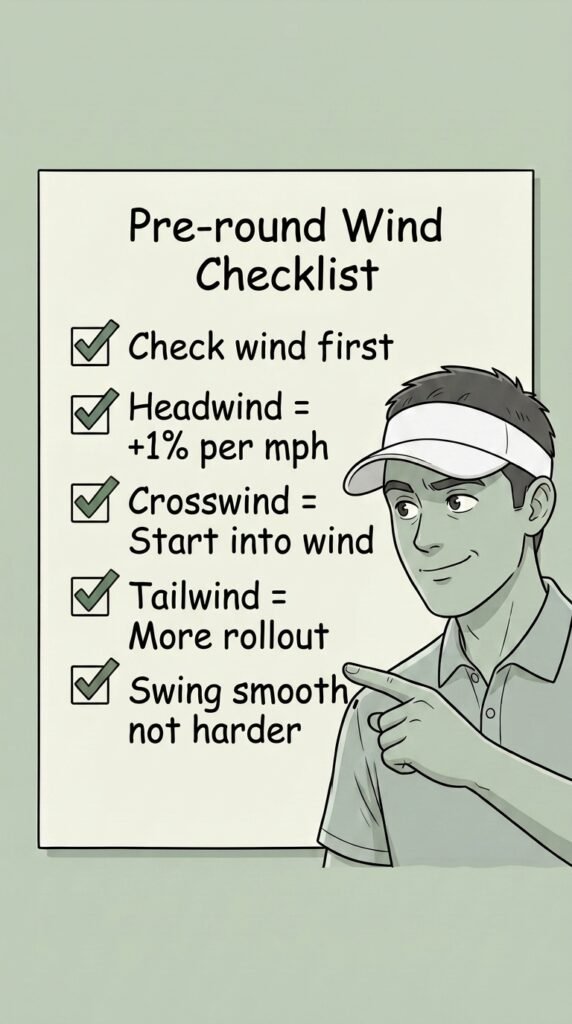
Save This Pre-Round Checklist
Before you head to the first tee, take a few seconds to run through this simple checklist. It’s designed to remind you of the key ‘playing in the wind’ decisions that can help you avoid unnecessary mistakes and score more consistently throughout your round.
Are You Choosing the Wrong Club in a Strong Wind?
Yes. You may be choosing the wrong club in a strong wind if you’re selecting it based on your normal yardage instead of the conditions you face.
Wind has a significant effect on both carry distance and ball flight, so the club that works on a calm day may leave you well short or send the ball much farther than expected.
When hitting into the wind, many golfers don’t take enough club and try to make up the distance by swinging harder. With a tailwind, it’s easy to misjudge the shot. Many golfers overestimate how much extra carry a tailwind gives them, but underestimate how much the ball may release after landing on its flatter flight.
Good club selection starts by assessing the strength and direction of the wind before deciding which club gives you the best chance of reaching your target. A smooth swing with the right club is usually far more reliable than forcing a shot with the wrong one.
Are You Letting the Wind Decide Where Your Golf Ball Finishes?
Yes. If you aim straight at the flag without allowing for the wind, you’re leaving too much to chance.
Crosswinds are where many golfers lose shots without realising it. Instead of starting the ball into the wind and letting it move towards the target, they aim directly at the flag and hope the wind doesn’t push it into trouble. That approach rarely ends well when there’s a bunker, water or rough beside the green.
Before you hit the shot, think about where the wind is likely to move the ball and choose a target that gives you room for it to drift safely. You don’t have to hit the perfect shot every time. You just need to start the ball in the right place. A good target gives the wind somewhere to work with instead of allowing it to carry your ball away from the safest part of the hole.
Are Tailwinds Easier Than Headwinds?
No. Tailwinds may help the ball travel farther, but they create a different challenge by making it more difficult to control where the ball finishes.
Many golfers see a tailwind and assume they can simply take one less club and swing as normal. While a tailwind does increase distance, the adjustment is often smaller than golfers expect. The bigger difference comes after the ball lands. Shots hit downwind usually fly on a flatter trajectory, release more, and can quickly run through the back of the green or into trouble.
Instead of thinking only about how far the ball will carry, think about where it is likely to finish. If there’s danger long, it’s often smarter to favour the front of the green and allow the ball to roll towards the flag rather than risking a shot that runs too far.
Should You Check the Wind Before Every Shot?
Yes. You should check the wind before every shot because its direction and strength can change throughout your round, even from one hole to the next.
Many golfers judge the wind on the first tee and assume it will stay the same, but wind conditions are rarely that predictable. Gusts can appear without warning, the direction can shift, and the wind where you’re standing may not be the same as the wind affecting the ball in the air.
Before every shot, take a few seconds to look at the flag and treetops first, since wind higher up can differ from what you feel at ground level; tossing grass can give a rough guide, but it won’t always reflect the wind the ball will face in flight. Then choose your club and target based on the current conditions, not what you experienced on the previous hole. Those few seconds of assessment can help you make better decisions and avoid giving away unnecessary strokes.
What Are the Best Tips for Playing Golf in the Wind?
The best tips for playing golf in the wind are to choose the right club, control your ball trajectory, pick a safe target and stay patient instead of trying to force difficult shots.
Windy conditions reward good decisions more than perfect swings. Before every shot, take a few extra seconds to assess the wind, think about how it will affect the golf ball and choose the option that gives you the best chance of keeping the ball in play. A simple routine can help you stay consistent, even when the conditions are challenging.
- Choose your club for the conditions – Base your club selection on the strength and direction of the wind, not your normal yardage.
- Control your ball flight – Focus on making a smooth, balanced swing rather than trying to hit the ball harder.
- Aim for a safe target – Allow for the wind conditions and choose a target that gives the ball room to drift without finding trouble.
- Accept what the wind gives you – Some shots won’t finish close to the flag. Staying patient often leads to better scores over the course of a round.
- Commit to your decision – Once you’ve chosen your club and target, trust the shot and avoid making last-second changes.
This article and video are intended as general golf strategy education and commentary for a broad audience. They are not personalised golf instruction or coaching, and readers should decide for themselves whether and how these ideas apply to their own game.